Complete Guide to Tree Health and Maintenance in Jacksonville delivers the expert strategies you need to protect your property's most valuable landscape assets in Florida's unique Zone 9a climate. Jacksonville's combination of intense summer storms, heavy rainfall, and subtropical humidity creates specific tree health challenges that require year-round attention. Your trees face threats from laurel wilt disease, southern pine beetles, and hurricane-force winds — challenges that demand proactive maintenance rather than reactive emergency response. Whether you're caring for mature live oaks that dominate 40% of our urban canopy or managing younger landscape plantings across Mandarin, Southside, or the Beaches, this guide provides the seasonal schedules, pest identification protocols, and storm-hardening strategies that keep Jacksonville trees healthy and your property protected.
Annual Tree Health Maintenance Schedule for Jacksonville
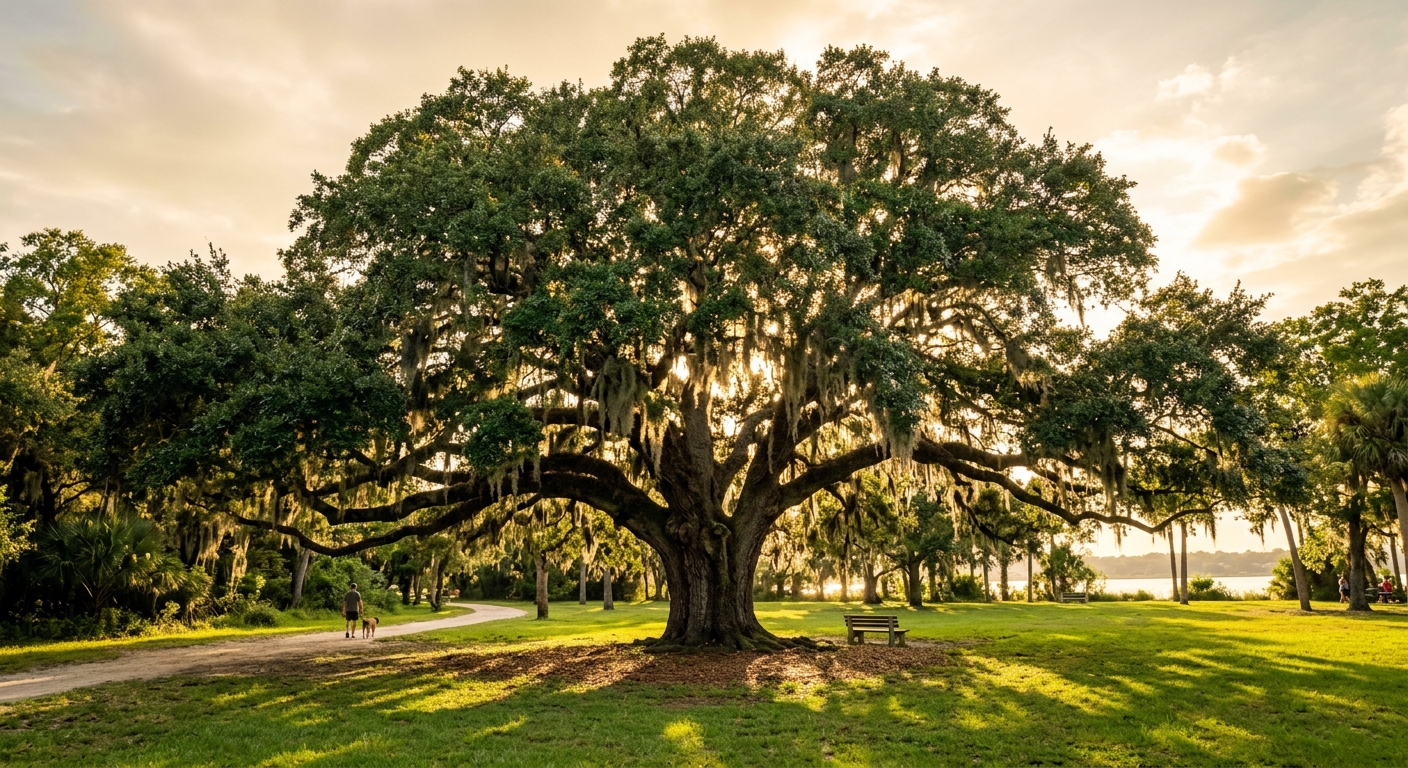
Tree health maintenance Jacksonville Florida requires a strategic seasonal approach that aligns with our distinct growing periods and storm patterns. Jacksonville's 52 inches of annual rainfall concentrated between May and September, combined with hurricane season threats, means your maintenance schedule must prioritize both growth support and structural resilience. A proactive maintenance schedule prevents the costly emergency removals that result from neglect and catches developing hazards 2-3 years before they become dangerous.
Spring Tree Care: Growth Season Inspection and Pruning
Spring tree care in Jacksonville begins in March when your trees enter their primary growth phase. Certified arborist inspection during this period identifies winter storm damage, checks structural integrity after dormancy, and establishes your fertilization schedule for the growing season. This is the optimal window for structural pruning before the canopy density increases and heat stress begins. Your spring maintenance checklist includes:
- Complete canopy inspection for deadwood, broken branches, and crossing limbs that create future weak points
- Root zone assessment to identify soil compaction from winter rains and ensure proper drainage before summer deluges
- Nutrient testing and slow-release fertilization schedule tailored to Jacksonville's sandy soils and high leaching rates
- Crown thinning for trees showing excessive density — reducing wind resistance before June storm season begins
- Pest monitoring for early-season threats including scale insects and fungal pathogens that thrive in spring humidity
Professional arborists complete major pruning work in March and April before temperatures climb above 85°F and stress response increases. If you notice uneven growth patterns, visible decay, or structural concerns during your spring walk-around, schedule a hazard assessment before the growing season accelerates those problems. Call (904) 634-3474 for spring inspection scheduling — early booking ensures completion before the storm preparation rush begins in May.
Summer Storm Preparation: Hardening Your Trees Before Hurricane Season
Summer storm preparation begins six weeks before hurricane season officially opens on June 1st. Jacksonville trees within 50 feet of structures require specific hardening protocols that reduce catastrophic failure risk during 80+ mph wind events. University of Florida IFAS research confirms that properly prepared trees are 60% less likely to suffer major damage compared to unpruned specimens — a difference that protects both your home and your neighborhood's power infrastructure.
Your pre-hurricane maintenance includes targeted crown thinning to reduce wind resistance without compromising structural strength, cabling and bracing installation for trees with co-dominant leaders or weak branch unions, and complete removal of deadwood that becomes dangerous projectiles in sustained winds. Integrated pest management checks during May and June identify boring insects and decay fungi that weaken wood strength precisely when storm resilience matters most.
Don't wait until a named storm enters the Gulf — tree services across Jacksonville, Arlington, and the Beaches are fully booked once hurricane warnings are issued. Complete your storm hardening in April and May when certified arborist availability is highest and you can make careful decisions rather than emergency responses.
Fall and Winter: Root Health and Structural Assessment
Fall and winter tree care focuses on root zone health and structural assessment after Jacksonville's demanding growing season. October through February brings lower rainfall, reduced pest pressure, and optimal conditions for identifying structural weaknesses without the obscuring density of full summer canopy. This period is ideal for major pruning work on mature trees, deep root fertilization to prepare for spring growth, and honest evaluation of trees that may require removal before next year's storm season.
Winter inspection reveals structural problems masked by leaves — trunk cracks, decay cavities, and dangerous lean angles become obvious. Your arborist can perform crown reduction on overgrown specimens, address root zone compaction from summer foot traffic, and plan removals that are safer and less expensive outside of emergency conditions. Jacksonville's mild winters allow year-round tree work, but fall scheduling often delivers better pricing and more flexible appointment availability than spring's rush period.
Jacksonville-Specific Tree Enemies: Diseases and Pests to Watch
Jacksonville trees face distinct disease and pest threats driven by our subtropical humidity, sandy soils, and position at the boundary between temperate and tropical zones. Recognizing these enemies early — before visible canopy decline begins — separates successful long-term tree health from expensive emergency removals. Your maintenance strategy must account for pathogens and insects that thrive specifically in Northeast Florida's climate and urban environment.
Laurel Wilt and Avocado Tree Protection in Your Landscape
Laurel wilt disease has devastated avocado trees, camphor trees, and native redbay throughout Jacksonville since 2009. This fungal pathogen, spread by the redbay ambrosia beetle, blocks water transport in susceptible trees and kills them within weeks of symptom appearance. If you have avocado trees in your landscape — common in Riverside, San Marco, and Ortega — monthly monitoring for wilting leaves, dark streaking in sapwood, and beetle boring dust is essential. Once symptoms appear, infected trees must be removed immediately and the wood destroyed to prevent beetle spread to neighboring properties. There is no cure — only prevention through systemic insecticide treatments applied by certified arborists before beetle attack occurs. Properties with valuable laurel family trees should establish preventive treatment protocols rather than waiting for infection.
Southern Pine Beetle Prevention in Mandarin and Southside Neighborhoods
Southern pine beetle outbreaks cycle through Jacksonville's Mandarin and Southside neighborhoods where loblolly and slash pines are common landscape trees. These tiny beetles attack stressed pines, boring beneath bark and introducing blue-stain fungi that kill trees within months. You'll recognize attacks by popcorn-sized pitch tubes on the trunk, reddish-brown boring dust at the tree base, and rapid needle browning from the crown downward. Drought stress and soil compaction make pines vulnerable — proper irrigation during dry periods and root zone protection from construction activity are your primary prevention tools. Once beetles colonize a tree, removal within two weeks prevents spread to adjacent pines. The beetle moves from tree to tree in expanding circles, so a single infested pine threatens your entire pine grove if removal is delayed.
Oak Wilt and Live Oak Disease Management
Oak wilt threatens Jacksonville's iconic live oaks, though the disease is less common here than in Central Florida due to our vector beetle's limited range. More prevalent is bacterial leaf scorch and various root rot fungi that attack live oaks stressed by construction damage, over-irrigation, or soil grade changes. Live oak health maintenance requires protecting the root zone — which extends 2-3 times beyond the canopy drip line — from compaction, grade changes, and trenching. Never prune oaks between April and June when beetle vectors are most active and wound contamination risk peaks. If your live oak shows progressive branch dieback, yellowing leaves despite adequate water, or mushrooms at the trunk base, schedule immediate hazard assessment. These trees often decline slowly over 3-5 years, creating a false sense that problems are minor until sudden structural failure occurs.
Is My Tree in Danger? Signs of Poor Health You Cannot Ignore
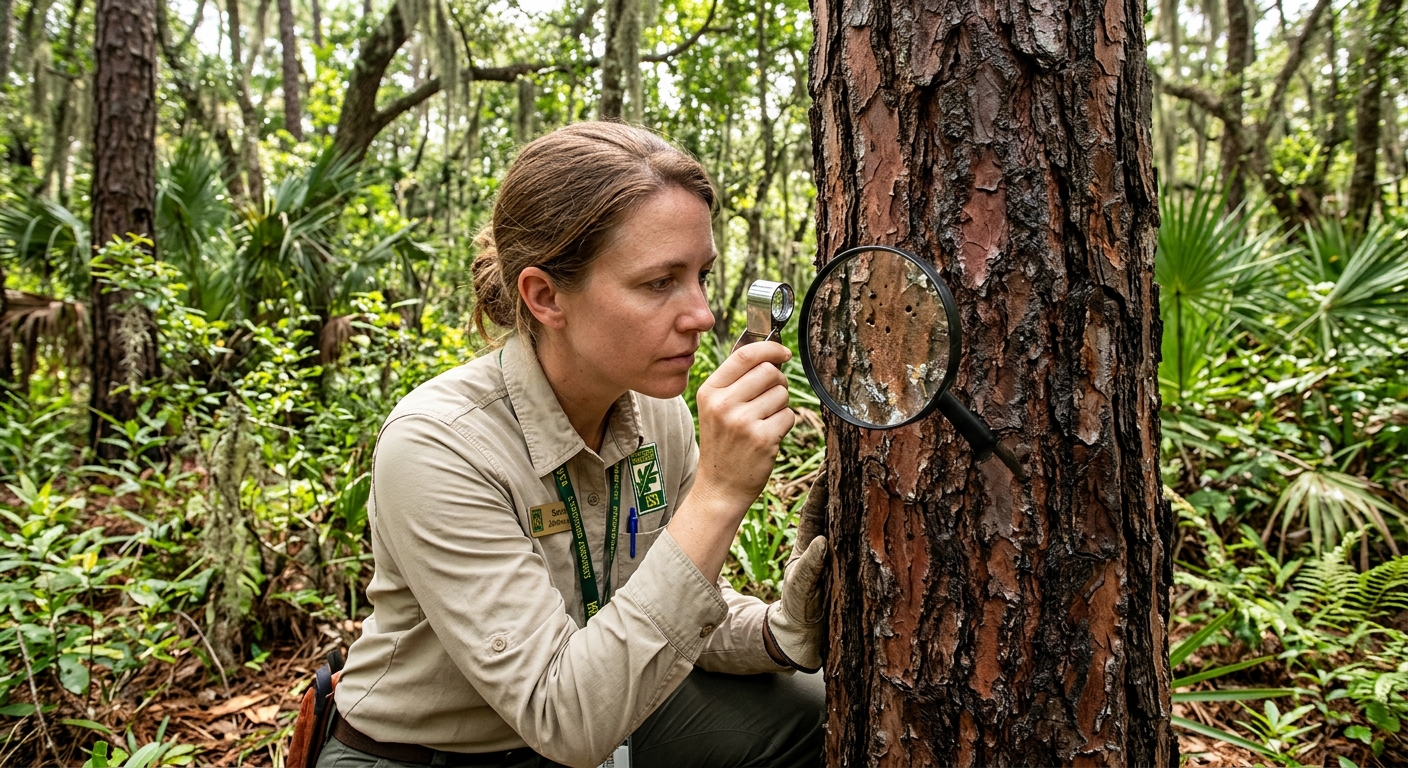
Recognizing dangerous tree health decline before catastrophic failure protects your family and property. Trees develop structural weaknesses and internal decay long before obvious external symptoms appear — by the time canopy thinning is visible, internal damage may be severe. Understanding the red flags that demand immediate professional assessment versus minor cosmetic issues you can monitor prevents both unnecessary alarm and dangerous delays.
Red Flags That Require Immediate Arborist Inspection
Certain symptoms indicate imminent hazard that requires certified arborist evaluation within days, not weeks. A sudden lean — any trunk angle change you can visibly detect compared to previous months — signals root failure or structural compromise that can progress to complete failure during the next wind event. Trunk cracks, especially vertical splits or separations at branch unions, indicate internal decay or structural overload. Exposed roots on the windward side of the tree, mushrooms growing from the trunk or root flare, and large areas of missing bark all point to advanced decay that threatens stability.
Canopy symptoms requiring urgent attention include sudden wilting of entire branches during the growing season, premature leaf drop affecting more than 25% of the crown, and dead branches concentrated on one side of the tree. These patterns often indicate root damage, vascular disease, or structural problems that progress rapidly once symptoms become visible. Don't wait to see if the tree recovers next season — internal damage continues even when external symptoms stabilize.
If you observe any of these red flags on trees within falling distance of structures, vehicles, or areas where people gather, call (904) 634-3474 for emergency assessment. The cost of inspection is minimal compared to the liability and damage costs of a tree failure you could have prevented.
When Tree Removal Is the Responsible Choice
Tree removal becomes necessary when structural integrity is compromised beyond repair, when disease threatens neighboring trees, or when the tree's position creates unacceptable risk regardless of current health. Advanced decay affecting more than 40% of the trunk circumference typically cannot be mitigated — the tree lacks the structural strength to resist normal wind loads. Similarly, root loss exceeding 50% of the root zone, whether from construction damage or decay, leaves the tree unable to maintain stability.
Trees leaning toward structures with root exposure on the tension side, trees with co-dominant trunks showing separation cracks, and specimens with multiple large decay cavities are candidates for removal rather than preservation attempts. The decision requires balancing the tree's value — shade, aesthetics, property value contribution — against genuine safety risk. A certified arborist provides objective risk assessment based on structural analysis, not emotional attachment or removal cost avoidance.
Jacksonville property owners carry liability for damage caused by trees they knew or should have known were hazardous. If professional inspection identifies high-risk conditions, documenting the assessment and following removal recommendations protects you legally and financially.
Diagnosing Canopy Decline and Crown Density Problems
Canopy decline progresses through predictable stages that help distinguish temporary stress from terminal health problems. Minor thinning — 10-15% reduction in leaf density compared to previous years — often results from drought, nutrient deficiency, or recoverable root damage. These trees respond to improved care: deep watering during dry periods, proper fertilization schedule, and root zone protection. You should see improvement within one growing season.
Moderate decline — 25-40% canopy thinning, branch dieback starting at tips and progressing toward the trunk, or progressive yearly decline despite treatment — indicates more serious problems. Root disease, vascular pathogens, or chronic stress from soil compaction or poor drainage typically drive this pattern. Professional diagnosis determines whether intervention can reverse the decline or whether the tree is in irreversible spiral.
Severe decline — more than 50% canopy loss, large scaffold branches dying, or epicormic sprouting along the trunk — almost always indicates the tree is dying. While some species produce vigorous sprouts as they decline, these are stress responses, not recovery. At this stage, focus shifts from saving the tree to safe removal before it becomes a hazard. Crown density assessment is part of standard hazard evaluation — if you're uncertain about your tree's decline severity, professional measurement provides objective data for decision-making.
Storm-Hardening Your Trees: Jacksonville Hurricane Preparation
Hurricane preparation for Jacksonville trees requires specific structural modifications that reduce wind damage risk while maintaining the tree's health and form. Proper storm hardening completed 6-8 weeks before hurricane season dramatically improves survival rates and prevents the catastrophic failures that damage homes, block roads, and down power lines. This isn't about removing all large trees — it's about strategic pruning and support that allows trees to flex and shed wind load without structural failure.
Structural Pruning to Reduce Wind Damage Risk
Structural pruning for storm resilience differs from aesthetic pruning. The goal is crown thinning that reduces wind resistance by 20-30% while preserving the tree's natural form and avoiding the excessive pruning that actually increases failure risk. Certified arborists remove crossing branches, shorten end-weight on long lateral limbs, and eliminate weak branch attachments that are first to fail in high winds. Dead wood removal is critical — these branches break free in moderate winds and become dangerous projectiles.
Proper thinning increases light and air movement through the canopy, reducing the sail effect that topples trees in sustained winds. However, over-thinning — removing more than 30% of living canopy — stresses the tree and stimulates excessive regrowth that creates new problems. The technique requires understanding tree biology and wind loading mechanics, which is why this work demands ISA-certified professionals, not general landscapers with chainsaws.
Schedule structural pruning in April and early May. Pruning during active hurricane season risks stimulating new growth that hasn't hardened off before the next storm arrives. Trees pruned 6-8 weeks before storm season have time to seal wounds and adjust to their new structure before testing begins.
Cabling and Bracing: When Support Systems Save Trees
Cabling and bracing systems provide supplemental support for trees with structural weaknesses that don't yet warrant removal. Co-dominant trunks with weak unions, large lateral branches with insufficient attachment strength, and trees with previous storm damage benefit from professionally installed support cables that limit excessive movement during wind events. These systems don't strengthen the tree — they reduce stress on weak points to extend the tree's safe service life.
Cable installation requires specialized hardware, precise placement based on load analysis, and regular inspection to ensure the system functions correctly. Improperly installed cables can accelerate failure rather than prevent it. The cables must allow normal seasonal movement while preventing the excessive flexing that causes separation at weak unions. Bracing rods stabilize split trunks by bolting them together, but this technique only works if the split is recent and the tree retains adequate structural integrity.
Support systems are temporary solutions for valuable trees. They require inspection after every major storm and periodic adjustment as the tree grows. If your tree needs cabling, you're managing elevated risk — the question is whether the tree's value justifies the ongoing maintenance and monitoring required to keep that risk acceptable.
Your 6-Week Pre-Hurricane Season Checklist
Six weeks before June 1st, begin systematic preparation of every tree within falling distance of structures. Walk your property and identify trees with dead branches visible from the ground, trees touching or overhanging your roof, and any tree showing lean, cracks, or obvious decay. Document these observations with photos — they establish timeline if insurance questions arise later.
Schedule professional inspection for high-priority trees: mature specimens over 40 feet tall near the house, trees with visible health problems, and any tree that concerns you. The arborist will assess structural integrity, recommend pruning or support systems, and identify trees that should be removed before storm season. Complete recommended work by mid-May — waiting until a named storm forms means you'll compete with thousands of other property owners for limited service availability.
- Inventory all trees within 50 feet of structures, power lines, and gathering areas
- Remove dead branches and obvious hazards you can safely reach from the ground
- Clear debris and stored items from under trees — these become projectiles in high winds
- Verify your tree service provider carries $1M+ liability insurance and workers compensation
- Review your property insurance coverage for tree damage — both damage your trees cause and damage to your trees
This checklist protects your immediate property and reduces your contribution to community-wide damage. Trees that fail during hurricanes often take down power lines, block evacuation routes, and damage neighboring homes. Responsible tree maintenance is both personal protection and civic duty.
Tree Care You Can Do Yourself vs. When to Call a Certified Arborist
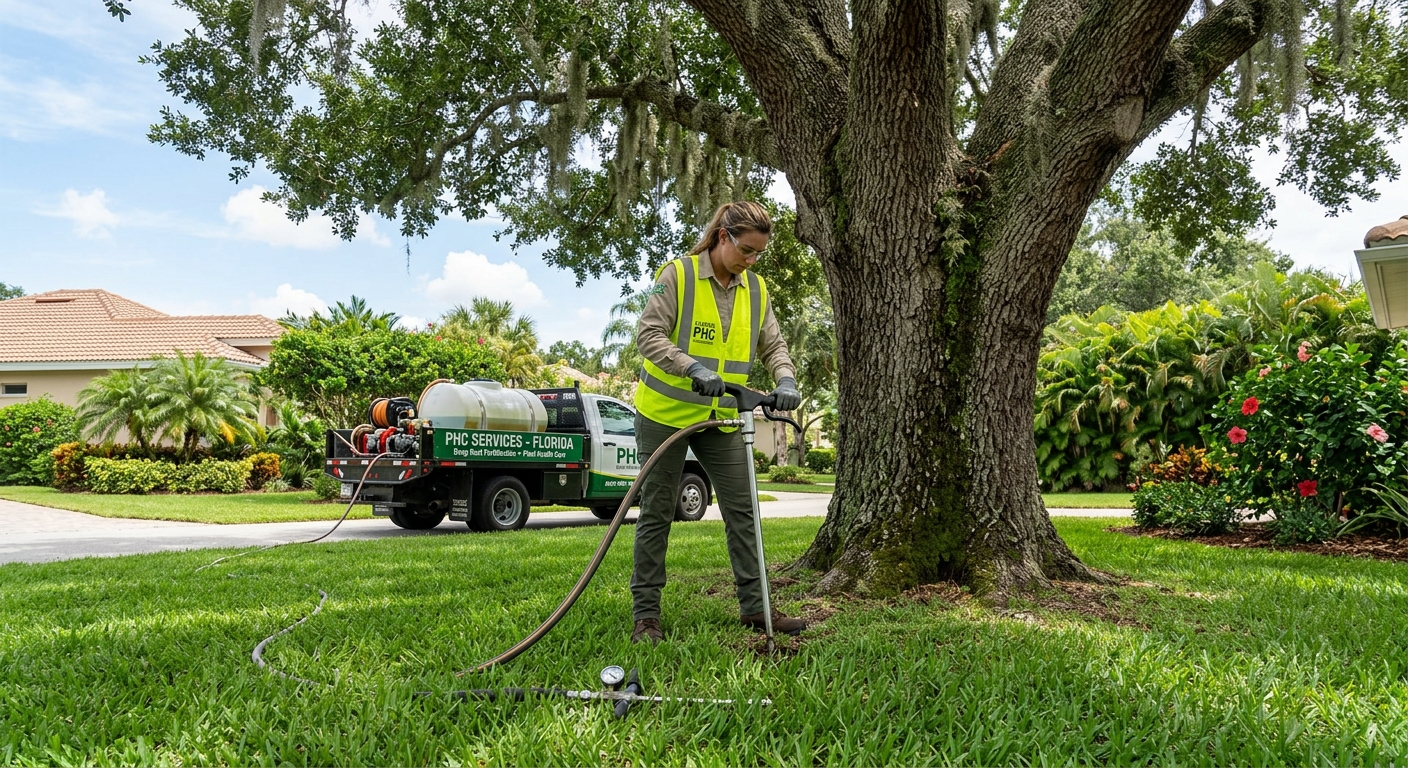
Understanding the boundaries between safe DIY tree care and work requiring professional expertise prevents both unnecessary service costs and dangerous homeowner accidents. Jacksonville averages 4-6 tree-related homeowner injuries requiring emergency treatment annually — almost all involving ladder work, chainsaw use, or contact with power lines. Knowing what you can safely handle and what demands professional help protects both your budget and your safety.
DIY-Safe Tasks: Mulching, Watering, and Ground-Level Care
Ground-level tree care provides significant health benefits without safety risk when performed correctly. Proper mulching — 2-4 inch layer of organic mulch extending to the drip line but pulled back 6 inches from the trunk — conserves moisture, moderates soil temperature, and improves soil structure as it decomposes. You can apply mulch anytime, but spring application before summer heat arrives delivers maximum benefit.
Young tree watering during establishment and drought periods requires no special skills — just understanding that deep, infrequent watering promotes deeper rooting than frequent shallow watering. New trees need 10-15 gallons per week during the first two growing seasons, applied slowly to soak the root zone rather than running off. Check soil moisture 4-6 inches deep before watering — our summer rains often provide adequate water even when the surface appears dry.
You can safely remove small dead branches under 1 inch diameter using hand pruners while standing on the ground. Clean your tools with rubbing alcohol between cuts to avoid spreading disease. Monitor for obvious pest problems — you don't need to identify the specific insect, just recognize when leaves show unusual damage or you see insects in abnormal numbers. These observations inform the professional when you call for assessment.
Limit your DIY work to what you can accomplish with both feet on the ground, using hand tools, on branches under 1 inch diameter. Everything beyond that crosses into professional territory where training, equipment, and insurance are required.
Why Professional Help Is Non-Negotiable for Safety
Certain tree care tasks carry injury and death risk that makes professional service non-negotiable regardless of cost. Any work requiring a ladder, any use of chainsaws above shoulder height, and any pruning within 10 feet of power lines demands certified arborists with proper equipment and liability insurance. Trees near power lines carry electrocution risk even if you're not touching the lines — electricity can arc through tree branches and through your body if you create a path to ground.
Large branch removal requires understanding tension and compression forces that determine cutting sequence. Incorrect cuts cause catastrophic branch failure that crushes everything below — including the person making the cut. Professional climbers use rigging systems, friction devices, and communication protocols that control every piece of wood from initial cut to ground placement. The techniques require years of training and regular practice — not weekend DIY projects.
Tree removal, major pruning on mature trees, storm damage cleanup, and any work on trees showing structural problems or decay all carry serious injury risk. The equipment and training required costs thousands of dollars and represents full-time professional commitment. Attempting to save a few hundred dollars on tree service by doing it yourself risks catastrophic injury, property damage, and liability exposure that far exceeds any possible savings. Call (904) 634-3474 when your tree needs exceed ground-level care — professional help protects you, your property, and your family.
ISA Certification: What It Means and Why It Matters
ISA certification identifies arborists who have passed rigorous examination covering tree biology, diagnosis, pruning, cabling, removal, and safety protocols. The International Society of Arboriculture credential requires documented experience plus comprehensive testing that many candidates fail on first attempt. Certified arborists maintain credentials through continuing education — they stay current on emerging pests, new techniques, and safety standards. This credential separates trained professionals from landscapers who own chainsaws.
When you hire an ISA-certified arborist, you receive science-based assessment rather than opinions. They recognize the difference between cosmetic leaf problems and serious vascular disease, understand Jacksonville-specific threats like laurel wilt and southern pine beetle, and recommend treatments based on proven effectiveness rather than what generates maximum revenue. Certification doesn't guarantee perfect work, but it establishes minimum competency that protects you from the worst practices common in this largely unregulated industry.
Verify certification before hiring — ask for the certification number and verify it at the ISA website. Legitimate certified arborists provide this information readily. Also confirm liability insurance and workers compensation coverage. If a worker is injured on your property and the company lacks workers comp, you may face liability for medical costs and lost wages.
Understanding Jacksonville's Tree Regulations and HOA Requirements
Jacksonville tree regulations operate at both municipal and neighborhood levels, creating compliance requirements many property owners don't discover until they're planning removal or facing violation notices. Understanding these rules before you need tree work prevents legal problems, fines, and conflicts with neighbors. The regulatory framework balances private property rights against community interests in maintaining canopy coverage and preventing indiscriminate removal.
Permits Required for Tree Removal Over 12 Inches
Jacksonville requires permits for removing trees over 12 inches diameter measured 4.5 feet above ground, with specific restrictions for protected species including live oaks, magnolias, and certain pines. The permitting process requires documenting why removal is necessary — typical approved reasons include disease or hazardous condition certified by an arborist, unavoidable conflict with approved development, or danger to structures. Aesthetic preferences and minor inconveniences don't meet the threshold.
Permit applications include site plans showing the tree location, species identification, diameter measurement, and justification for removal. Processing takes 2-4 weeks under normal conditions. Emergency removal of imminently hazardous trees can proceed without permits, but you must document the emergency condition with photos and professional assessment. Removing protected trees without permits carries fines up to $500 per tree plus required mitigation planting.
Before scheduling removal of any significant tree, verify permitting requirements with Jacksonville's Planning and Development Department. Your tree service should be familiar with local regulations, but ultimate compliance responsibility rests with you as property owner. Don't assume that because you hired a professional, permits were obtained — verify independently.
HOA Tree Ordinances: Know Your Neighborhood Rules
HOA tree ordinances in Jacksonville neighborhoods often exceed municipal requirements, establishing strict rules about removal, pruning, and even species selection for new plantings. Many associations require approval for any tree work beyond minor pruning, with architectural review committees evaluating requests based on aesthetic impact, sight line protection, and community canopy goals. Your HOA may prohibit removing healthy trees regardless of your preferences, or require replacement plantings that meet specific size and species criteria.
Review your HOA covenants before planning significant tree work. Some associations require advance notice to neighbors, especially for removals that affect shared sight lines or boundary trees. Failure to obtain required HOA approval can result in fines, required restoration, and legal action to enforce compliance. In severe cases, the HOA can place liens on your property for unpaid fines related to unauthorized tree work.
The approval process typically requires submitting plans, photos, and professional justification for the work. Build 4-6 weeks into your timeline for HOA review if your neighborhood has tree ordinances. Understanding these rules before you receive removal quotes prevents the frustration of discovering you can't proceed with work you've already contracted.
Liability and Property Owner Responsibility Under Florida Statute 163.045
Florida Statute 163.045 allows HOAs to require maintenance of trees that pose safety hazards, shifting liability for damage to property owners who neglect obvious problems. If your tree shows visible signs of hazard — significant lean, large dead branches, decay visible from normal inspection — and subsequently causes damage during a storm, you may be liable even if the damage occurred during a hurricane. The standard is whether a reasonable property owner should have recognized and addressed the hazard.
This statute creates legal incentive for proactive maintenance rather than hoping failing trees survive one more season. Document your maintenance with photos and service records. If you receive professional assessment identifying hazards and follow recommendations for pruning or removal, you demonstrate reasonable care. If you ignore professional advice and the tree later fails, your liability exposure increases substantially.
Boundary trees shared with neighbors create joint responsibility and joint liability. Major work on boundary trees legally requires neighbor agreement in most circumstances. Communicate early about shared trees showing health problems — collaborative maintenance decisions prevent legal disputes and share costs fairly. If your neighbor refuses to participate in maintenance of a hazardous shared tree, document your attempts to cooperate and consult an attorney about your options under Florida property law.
The True Cost of Tree Health Maintenance in Jacksonville
Understanding real costs of tree health maintenance helps you budget appropriately and recognize when quotes are reasonable versus when you're being overcharged. Jacksonville tree service pricing varies based on tree size, accessibility, work complexity, and risk level, but general ranges exist that allow informed evaluation. Knowing these costs also illustrates why preventive maintenance saves thousands compared to emergency removal after neglect creates hazards.
What Professional Tree Maintenance Actually Costs
Basic pruning for small to medium trees (under 30 feet) typically costs $150-400 depending on canopy density and number of cuts required. Large mature trees (40-60 feet) requiring crown thinning, deadwood removal, and structural pruning range from $400-1,200. Very large specimens over 60 feet, complex multi-trunk trees, or those requiring crane access can exceed $2,000 for comprehensive pruning. These prices include ground cleanup and debris removal — if a quote excludes cleanup, clarify final cost including all labor.
Tree health assessment by a certified arborist costs $100-250 for detailed inspection with written report documenting conditions, recommendations, and risk level. This assessment provides objective third-party documentation useful for insurance purposes, HOA applications, and legal liability protection. Many companies waive the assessment fee if you proceed with recommended work, making professional diagnosis essentially free when you're already planning maintenance.
Storm damage cleanup and emergency work carries premium pricing — often 50-100% above normal rates — due to urgency, weekend/holiday scheduling, and dangerous working conditions around downed lines and unstable trees. This premium pricing is why pre-storm maintenance delivers such strong ROI. Spending $600 on preventive pruning in April avoids $2,000 emergency cleanup in July.
Why Preventive Maintenance Saves Thousands in Emergency Removal
Tree removal costs escalate dramatically with tree size, location difficulty, and hazard level. A small tree under 20 feet in open lawn costs $300-600 for removal and stump grinding. Medium trees (30-40 feet) range $800-1,500. Large mature trees over 50 feet start at $1,500 and can exceed $5,000 for specimens requiring crane removal, piece-by-piece dismantling near structures, or hazardous conditions like advanced decay or extreme lean.
Emergency removals — trees that have failed, are actively failing, or present imminent danger — add 50-100% to base costs due to danger premiums and immediate response requirements. A tree you could have removed for $1,200 with proper planning costs $2,500-3,000 as an emergency. Add property damage from the failure itself — roof repairs, fence replacement, vehicle damage — and neglecting a known hazard can cost $10,000-25,000 in total losses.
Preventive maintenance catches problems 2-3 years before they become emergencies. A tree showing early decline can often be saved with $300-800 of treatment. Waiting until it's dying pushes you to $1,500-3,000 removal. Annual inspection costs $100-150 — the equivalent of one emergency service call pays for 15-20 years of proactive monitoring. The financial case for prevention is overwhelming once you understand actual emergency costs.
Getting Accurate Quotes from Local Tree Services
Accurate tree service quotes require on-site assessment — beware of phone quotes based on your description of the tree. Size estimates from ground level are notoriously inaccurate, and hidden factors like decay, proximity to power lines, or access restrictions dramatically affect cost. Request quotes from at least three providers, ensuring each visits the property and provides written estimates detailing specific work to be performed.
Compare quotes on an apples-to-apples basis. Does the price include stump grinding or just tree removal? Does it include hauling debris or just cutting and piling? Will they protect landscaping during the work or focus solely on the tree? The lowest quote often excludes services the higher quotes include — clarify exactly what you're purchasing before making price comparisons.
Verify insurance before signing contracts. Request certificates of liability insurance and workers compensation directly from the insurance company, not just from the contractor. An expired or fraudulent insurance certificate leaves you liable if workers are injured or your property is damaged. Legitimate professionals provide current insurance documentation without hesitation — if a contractor resists or delays providing proof of insurance, exclude them from consideration regardless of price.
For detailed quotes on your specific trees, call (904) 634-3474 to schedule on-site assessment. Written estimates with clear scope of work prevent misunderstandings and give you documentation for budget planning and insurance purposes.
Why Jacksonville Property Owners Trust Professional Tree Care
Professional tree care delivers value beyond the immediate service — it provides safety assurance, liability protection, and expert problem-solving that prevents small issues from becoming expensive disasters. Jacksonville property owners who invest in certified arborists protect their largest landscape investment while avoiding the injury risk and legal exposure that come with DIY approaches to complex tree work. The right tree service becomes a long-term partner in protecting your property's health and value.
ISA-Certified Arborists: The Standard for Expert Tree Health Assessment
ISA-certified arborists bring science-based expertise to tree health assessment that general landscapers and unlicensed tree services cannot match. They recognize subtle symptoms of vascular disease, identify pest problems in early stages when treatment is still effective, and understand the structural mechanics that determine whether a tree can be safely preserved or requires removal. This expertise prevents two costly errors: removing trees that could have been saved, and attempting to save trees that should be removed.
Certified arborists understand Jacksonville's specific challenges — they know laurel wilt symptoms, recognize southern pine beetle attack patterns, and understand how our soil types affect root health. They stay current on emerging threats and new treatment protocols through required continuing education. When an ISA-certified arborist tells you a tree needs removal, you can trust the recommendation is based on genuine safety concerns, not revenue maximization.
The credential also provides legal protection. If your tree subsequently fails and causes damage, documented assessment by a certified professional demonstrating you followed expert recommendations establishes that you acted reasonably. This documentation can be decisive in liability disputes with insurance companies or injured parties.
Protecting Your Home and Family Through Hazard Identification
Hazard tree identification requires training and experience that homeowners simply don't possess. Internal decay, root disease, and structural weaknesses develop invisibly until failure is imminent. Professional hazard assessment uses visual inspection techniques, sounding methods to detect hollow sections, and resistance drilling for precise decay measurement. These tools identify problems years before they become obvious to untrained observers.
Trees that appear healthy to casual observation can harbor dangerous defects. Co-dominant trunks with included bark, root rot fungi visible only by mushroom fruiting bodies hidden in ground cover, and progressive lean too gradual for daily observers to notice all require professional identification. Annual inspection catches these developing hazards when they're still manageable, before they threaten your family during the next windstorm.
The service protects more than your immediate property. Hazardous trees that fail during storms damage neighboring homes, injure passersby, and destroy community infrastructure. Professional care is civic responsibility as much as property protection — it ensures your trees contribute to Jacksonville's beautiful urban canopy without threatening the safety of others.
Insurance-Backed Safety and Liability Protection
Professional tree services carry liability insurance and workers compensation that protect you from catastrophic financial exposure. If a worker falls from your tree or a limb crushes your neighbor's car during removal, the service's insurance covers these losses. Without this protection, you could face personal liability for injuries and property damage that easily exceed $100,000.
Verify insurance before work begins — this cannot be overstated. Request certificates of insurance directly from the carrier showing current coverage with limits of at least $1 million for general liability and statutory workers compensation for all crew members. Call the insurance company to verify the policy is active — fraudulent certificates are common in this industry. If your contractor cannot or will not provide proof of insurance, they are not legitimate professionals regardless of how attractive their pricing appears.
Insurance-backed service also guarantees quality recourse if work is performed improperly. If a tree service damages your property, their liability coverage pays for repairs. If they prune incorrectly causing tree decline, you have documented recourse. Uninsured operators disappear when problems arise — you have no practical remedy for poor work or damage.